Porous Materials for Environmental Applications

15 - 19.03.2026 • Poland

Hotel Bania, Białka Tatrzańska

Partners & Sponsors

Plenary speakers

Voices driving innovation in porous materials.

Our plenary lineup features internationally recognized leaders whose keynotes will frame the core themes of PMEA 2026. These researchers bring deep insight into porous materials, advanced applications, and emerging scientific challenges.

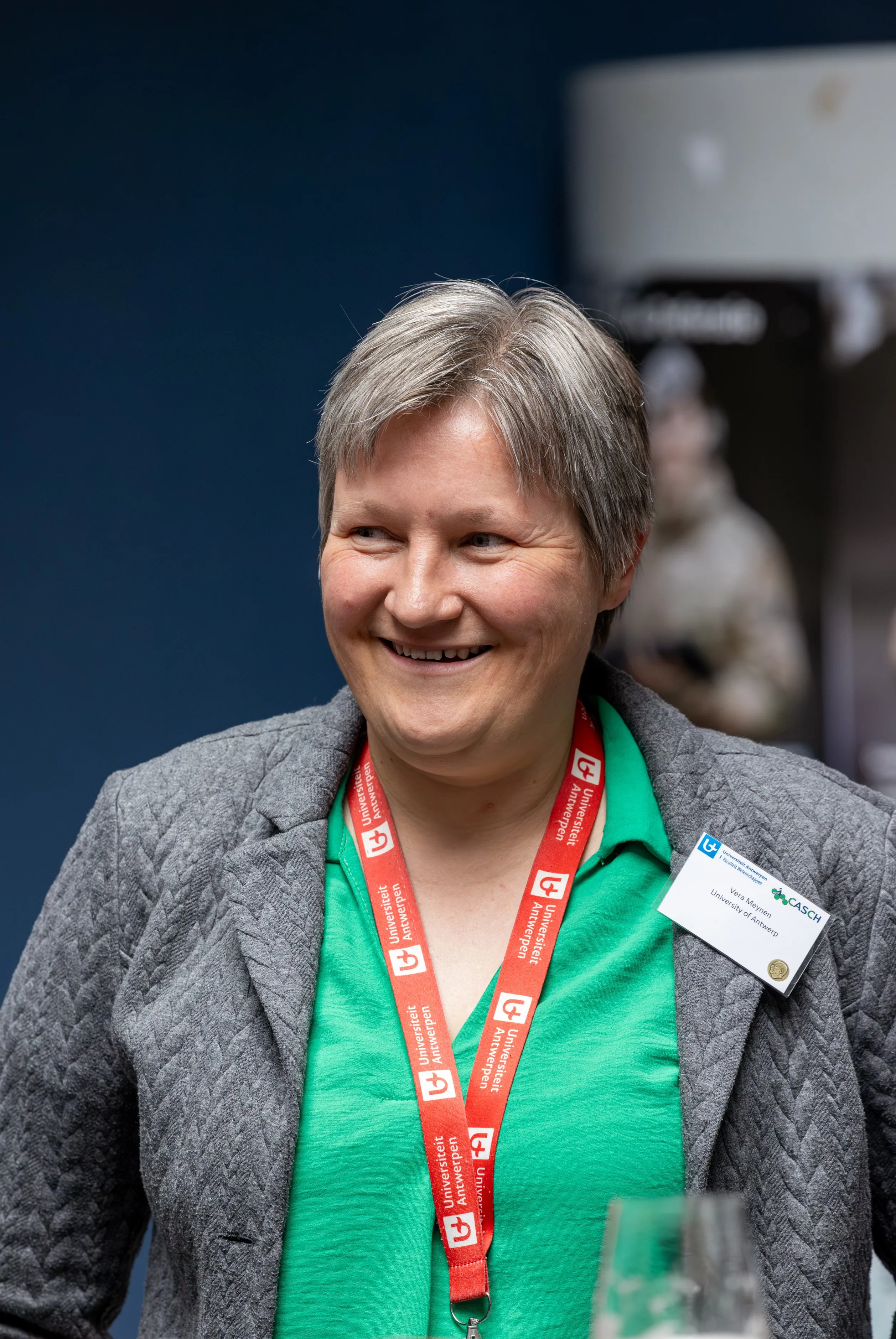
Portrait of Prof. Dr. Vera Meyen smiling at a conference.

Prof. Dr. Vera Meyen leads research at the University of Antwerp on hybrid organic-inorganic materials for separation, sorption and catalysis. She connects synthesis, structure and performance across hierarchical zeolites and advanced ceramic membranes.

Dr. Meyen collaborates with the InSusChem consortium and LADCA group on scalable material innovation, and has 150+ publications and several patents.

Prof. Dr. Vera Meyen

Professor of Chemistry, University of Antwerp, Belgium

catalysis and photocatalysis
Portrait of Prof. Dr. Joaquín Silvestre-Albero.

Prof. Dr. Joaquín Silvestre-Albero is a leading expert in the synthesis and characterization of porous solids for environmental and biomedical applications, including gas adsorption/separation, photocatalysis and drug delivery.

With over 200 publications, he has led key EU MSCA projects like NanoMed (medical applications) and CLEANWATER (water treatment), and collaborates widely with academic and industrial partners.

Prof. Dr. Joaquín Silvestre-Albero

Professor of Inorganic Chemistry, University of Alicante, Spain

environmental adsorption and separation
Portrait of Prof. Dr. Virginie Hornebecq.

Prof. Dr. Virginie Hornebecq is a member at Aix-Marseille University and MADIREL Laboratory, working on hybrid and composite materials for biomedical applications, drug delivery and drug detection.

She has co-authored over 60 papers and 2 patents, designing materials for low-concentrated drug detection and stimuli-responsive release.

Prof. Dr. Virginie Hornebecq

Professor of Chemistry, Aix Marseille University, France

biological and biomedical applications

Invited speakers

In addition to our plenary keynotes, the invited speakers bring rich, specialized perspectives across synthesis, performance, materials engineering, and applications. These talks will deepen the scientific discourse and showcase cutting-edge developments from both academic and applied research.

Engage with contributions that bridge foundational science and real-world innovation, offering insights relevant to researchers, practitioners, and industry partners alike.

Portrait of Prof. Dr. Mariusz Barczak from TVP3 Lublin discussio.

Prof. Dr. Mariusz Barczak researches porous and hybrid materials at Maria Curie-Skłodowska University, focusing on surface engineering and tailored functions for biomedical systems.

He has published 100+ publications and leads projects advancing carbon, silica, and polymer based materials, collaborating widely with academia and industry.

Prof. Dr. Mariusz Barczak

Professor of Chemistry, Maria Curie-Skłodowska University, Poland

biological and biomedical applications
Portrait of Prof. Dr. Dariusz Matoga.

Prof. Dr. Dariusz Matoga focuses on the design and synthesis of MOFs and porous coordination materials for sorption and separation, sensing, and energy applications.

His work advances pore engineering and structure–property relationships in hybrid materials through 80+ publications and collaborative initiatives.

Prof. Dr. Dariusz Matoga

Professor of Inorganic Chemistry, Jagiellonian University in Kraków, Poland

design and synthesis of materials
Portrait of Prof. Dr. Dimitrios A. Giannakoudakis.

Prof. Dr. Dimitrios A. Giannakoudakis develops composite porous materials (MOFs, oxides, nanoporous carbons) for air and water purification and catalytic environmental technologies.

He studies (photo)catalytic valorization of biomass and (micro)plastics, linking physicochemical properties to performance mechanisms (130+ publications; 7 books).

Prof. Dr. Dimitrios A. Giannakoudakis

Professor of Chemistry, Maria Curie-Skłodowska University, Poland

environmental and catalytic applications

Important deadlines

Staying on track with the key dates is essential to ensure a smooth participation at PMEA 2026. By following the timeline, you can secure your registration, prepare your research for abstract submission and complete your payment on time.

  1. Registration

    The registration deadline has been extended. Don't miss your chance to attend the conference. Register now to secure your participation and enjoy full access to scientific sessions, networking, and social events.

  2. Abstract submission

    Submit your abstract by this date to present your research at PMEA 2026. Accepted abstracts will be included in the official program as oral or poster presentations.

  3. Payment

    Pay your conference fee to confirm full participation. This guarantees access to all sessions and secures the special discounted hotel rate.

  4. Conference

    Conference begins at Hotel Bania, Białka Tatrzańska. Check in, pick up your badge and conference materials, and join the welcome and opening talks.

Conference Scope

The conference brings together scientists and professionals to share advances in porous, layered, nanostructured, ceramic, and construction materials, focusing on applications in environment, energy, catalysis, and biomedical technologies.

Advanced materials design and functionality

Development and synthesis of porous, layered, nanostructured, ceramic, and construction materials with tailored magnetic, catalytic, electronic, and mechanical properties for diverse applications.

Characterization, Modeling, and Performance

Analytical, computational, and AI-driven approaches for understanding, predicting, and optimizing material structure, stability, and functionality across scales.

Applications for sustainability and health

Innovative uses of advanced materials in environmental protection, catalysis, energy storage and conversion, and biomedical technologies, emphasizing durability, scalability, and sustainability.

Characterization and Modeling

  • Advanced spectroscopy, microscopy, diffraction and scattering methods
  • In situ / operando monitoring of adsorption, catalysis and degradation
  • Mechanical and thermal testing of ceramics and construction materials
  • Computational modeling, simulations and AI-based design

Stability, Durability and Scale-up

  • Long-term stability, ageing and regeneration of porous/nano/ceramic materials
  • Durability of construction and ceramic materials in harsh environments
  • Scale-up, pilot testing and industrial demonstration
  • Life cycle assessment, recyclability and sustainability

Environmental Adsorption and Separation

  • Water purification, desalination and pollutant removal
  • Greenhouse gas capture and separation (CO₂, CH₄, N₂O, etc.)
  • Adsorbents, membranes and ceramic filters
  • Construction and ceramic materials for environmental remediation

Catalysis and Photocatalysis

  • Heterogeneous catalysis with porous, ceramic, layered and nanostructured materials
  • Photocatalytic degradation of pollutants
  • Electrocatalysis and photoelectrochemical reactions
  • Ceramic-based catalytic supports and membranes

Energy storage and conversion

  • Porous, ceramic and nanostructured materials for batteries, supercapacitors, fuel cells
  • Hydrogen production, storage and utilization
  • Thermoelectric and piezoelectric ceramics for energy harvesting
  • Energy-efficient and insulating construction materials

Biological and Biomedical applications

  • Drug delivery, imaging (SEM, TEM) and biosensing
  • Porous and ceramic scaffolds for tissue engineering
  • Biocompatibility, antimicrobial and toxicity studies
  • Smart multifunctional carriers (magnetic, ceramic, nanocomposites)

Emerging topics and Future perspectives

  • Future trends in greenhouse gas capture, storage and utilization (CCS, CCU, methane conversion)
  • Smart and adaptive multifunctional materials
  • Integration of porous, ceramic and nanomaterials into devices, coatings and structures
  • Industry-academia collaboration, case studies and commercialization